
TĚTE-À-TĚTE
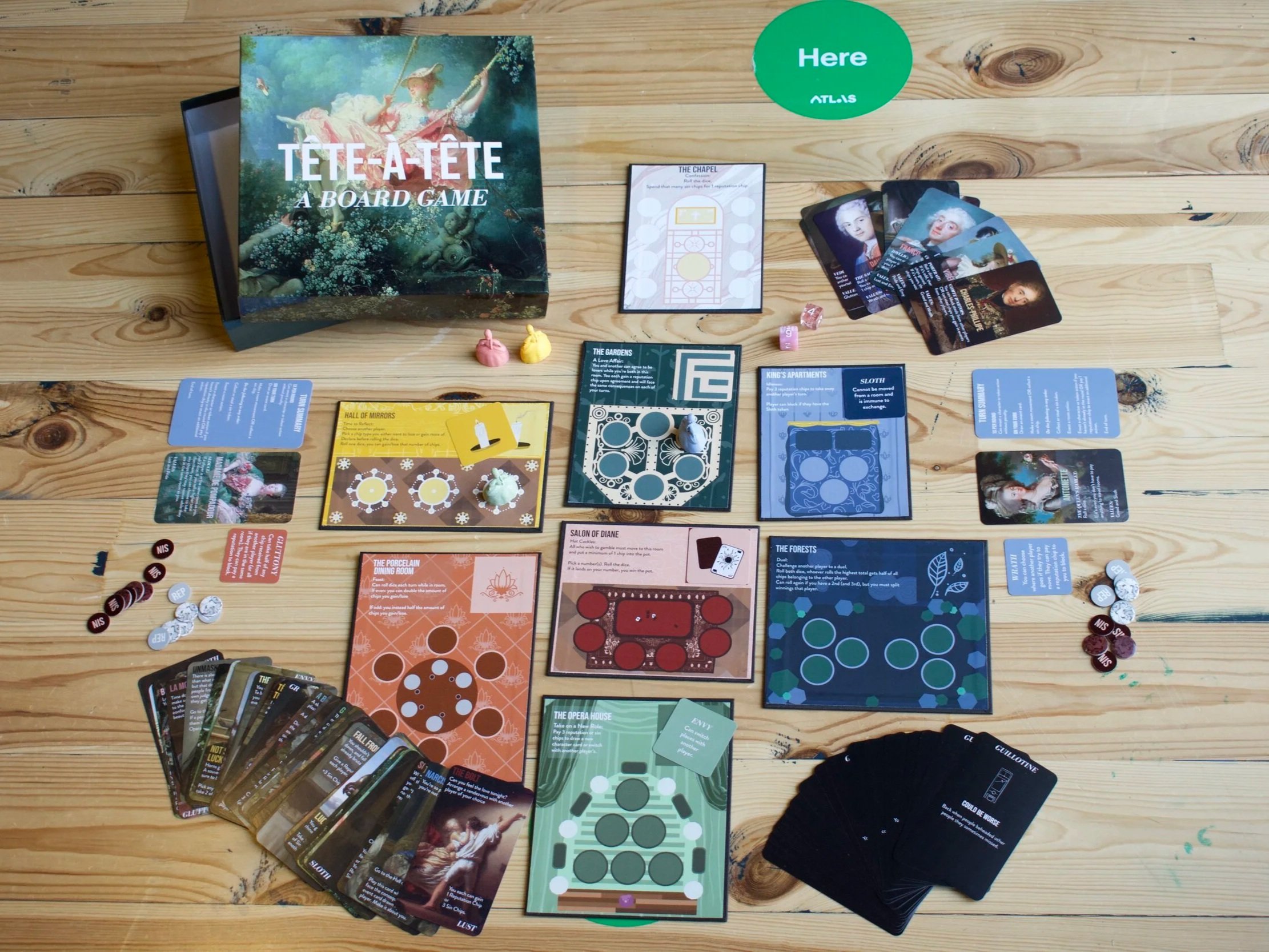
Tête-à-Tête is an art history based board game that allows people to engage with the people, stories, and themes behind the Rococo art period.
CONTEXT
Undergraduate Thesis Project
ROLE
Game Designer, Asset Designer, and Play-test Moderator
TOOLS
Figma, Illustrator, & Rhino
THE GAME
It’s France, during the Rococo period. For you, it’s all about power, and, of course, having a little bit of fun here and there. Party till your heart’s content, kiss a pair of lips you may not legally be bound to, and defend your honor in the early hours of the morning. Life is grand, and you hope it never ends. Then again, all good things do.
OBJECTIVE
Throughout the game, players will collect Sin and Reputation chips. Reputation chips serve as your life force, and help players win the game. Sin chips give players greater mobility and freedom during the game, but penalize them at the end of it.
The game ends once someone travels to all seven rooms. Then, each player must subtract a Reputation chip for every Sin chip they have. The player with the most reputation chips left wins (and gets to keep their head).



GAME OBJECTS
EVENT CARDS
There are 42 unique event cards each based on the history and stories behind specific Rococo art pieces.

CHARACTER CARDS
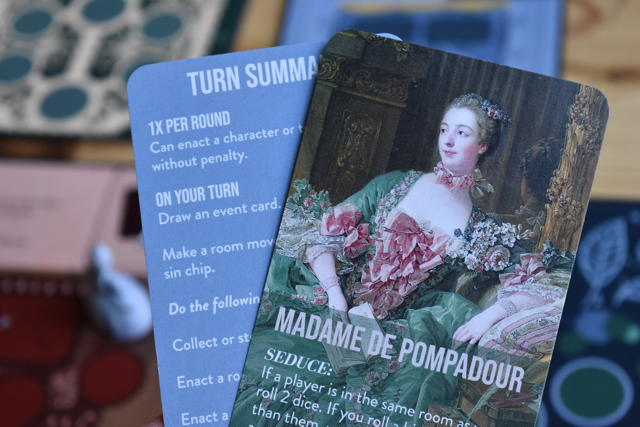
There are 12 character cards, each with a unique ability to aid the players.

THE PLAYSPACE
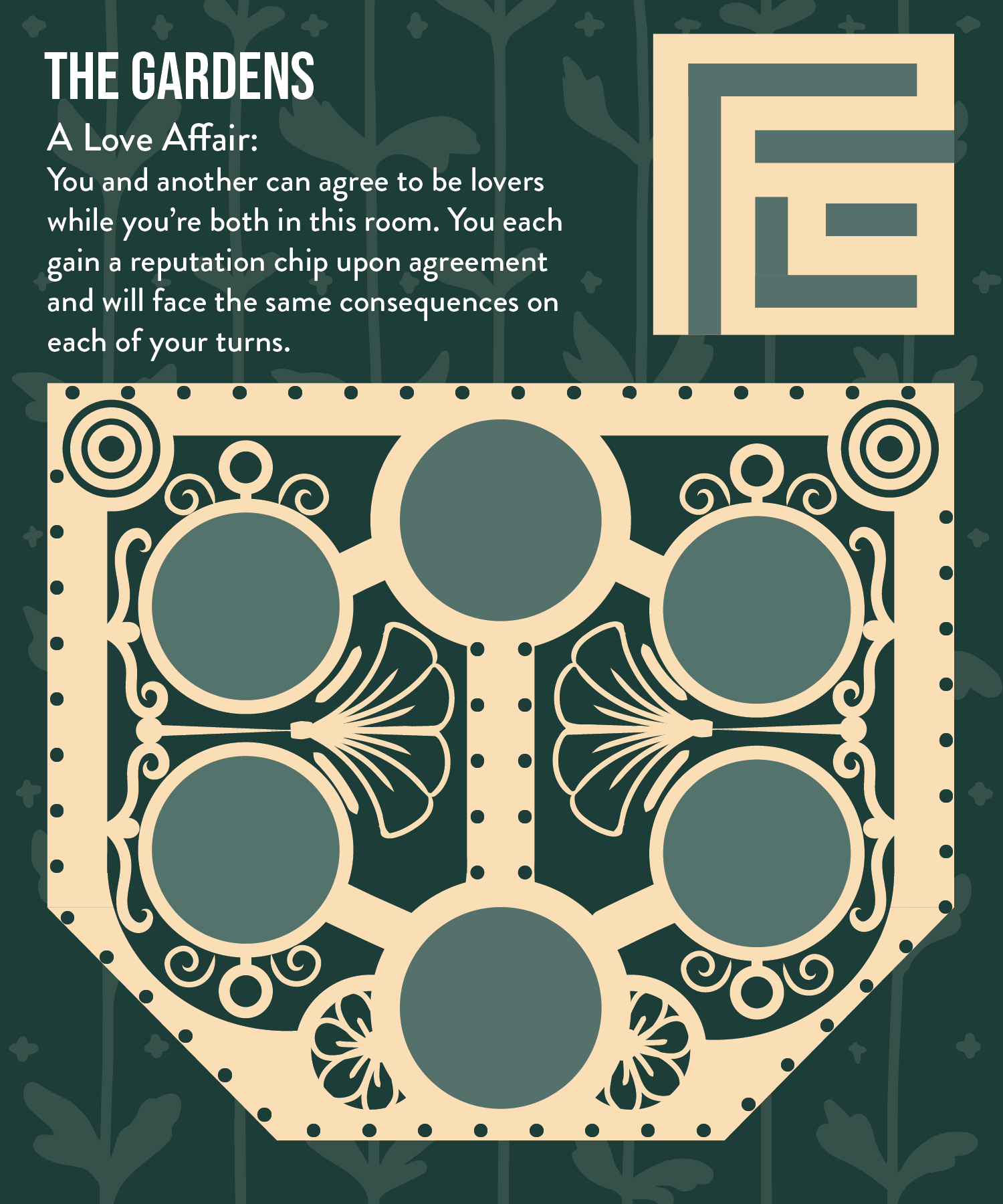
There are seven rooms, each thematically tied to one of the seven deadly sins. Every room is based on a room in Versailles.
Will it be “off with your head”? Or will you be able to have your cake and eat it too?
PLAYER ACTIONS
As players travel through the seven rooms, they can participate in activities like gambling or duels to get more Sin or Reputation chips.
A turn consists of the following actions: enact a character ability, draw an event card, move rooms using sin chips, collect or steal from other players, and participate in room activities.

THE PROCESS
“How might we use games to engage people with art?”
PROBLEM
Problem: There are limited opportunities to engage with art history outside of museums, galleries, and educational/academic settings.
Solution: A board game!
GAME VALUES
Game values guide the game design process and often define that player’s experience. Rococo has its own distinct set of values, and to truly reflect the spirit of this art period, I used these characteristics as my game values.


I did this was focusing on competitive play and balancing a sense of pressure and silliness in my player’s actions and emotions while playing.
THE DESIGN PROCESS
Ideation:
What are some mechanics that could be fun?
Prototyping:
Implement ideas in a way that is testable.
(usually with lots and lots of paper)
Playtesting:
Have people play it!
Are their experiences reflecting my game values?
Evaluate & Revise:
What's working? what isn't?
Make necessary changes.
Repeat.
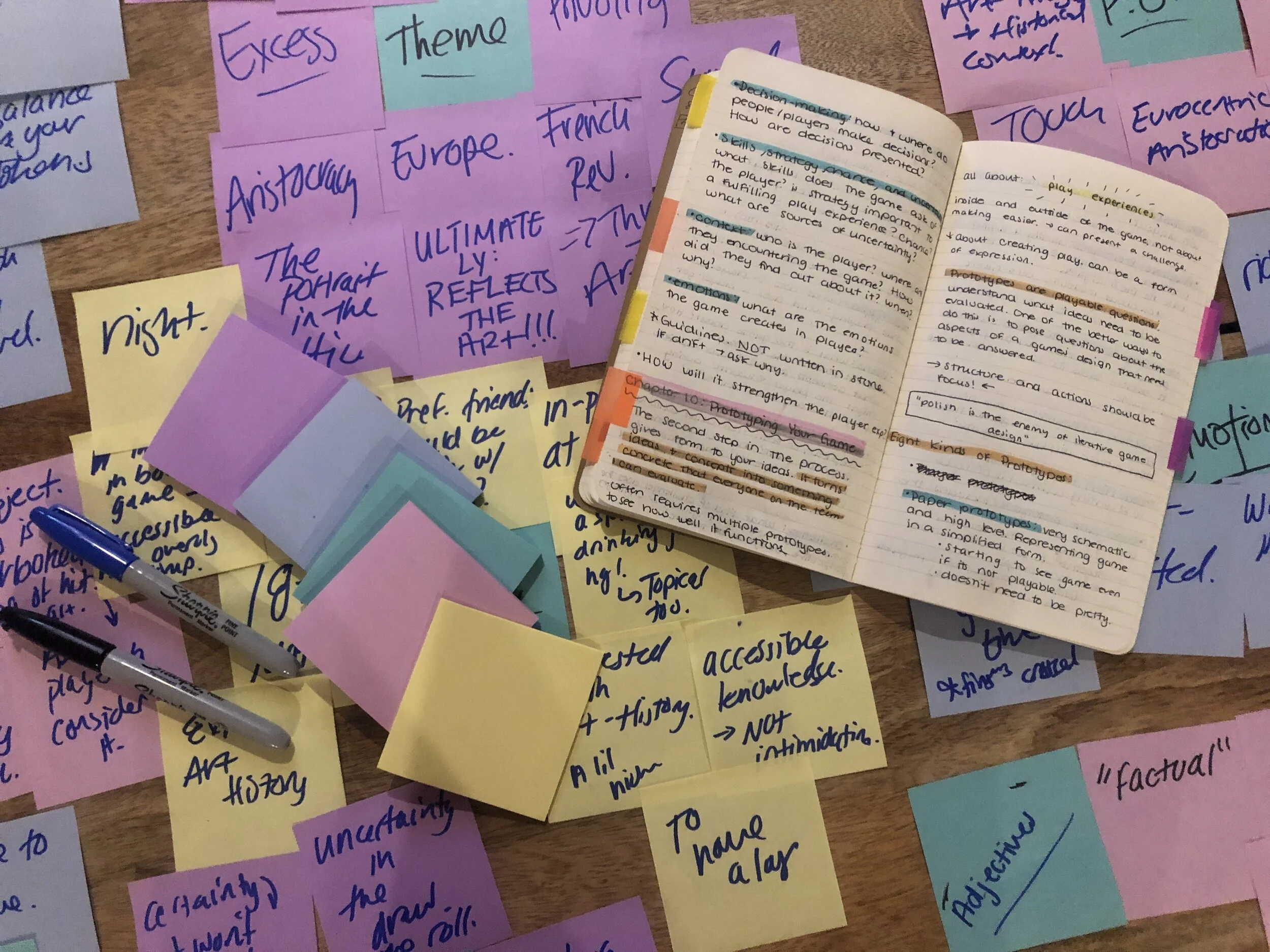
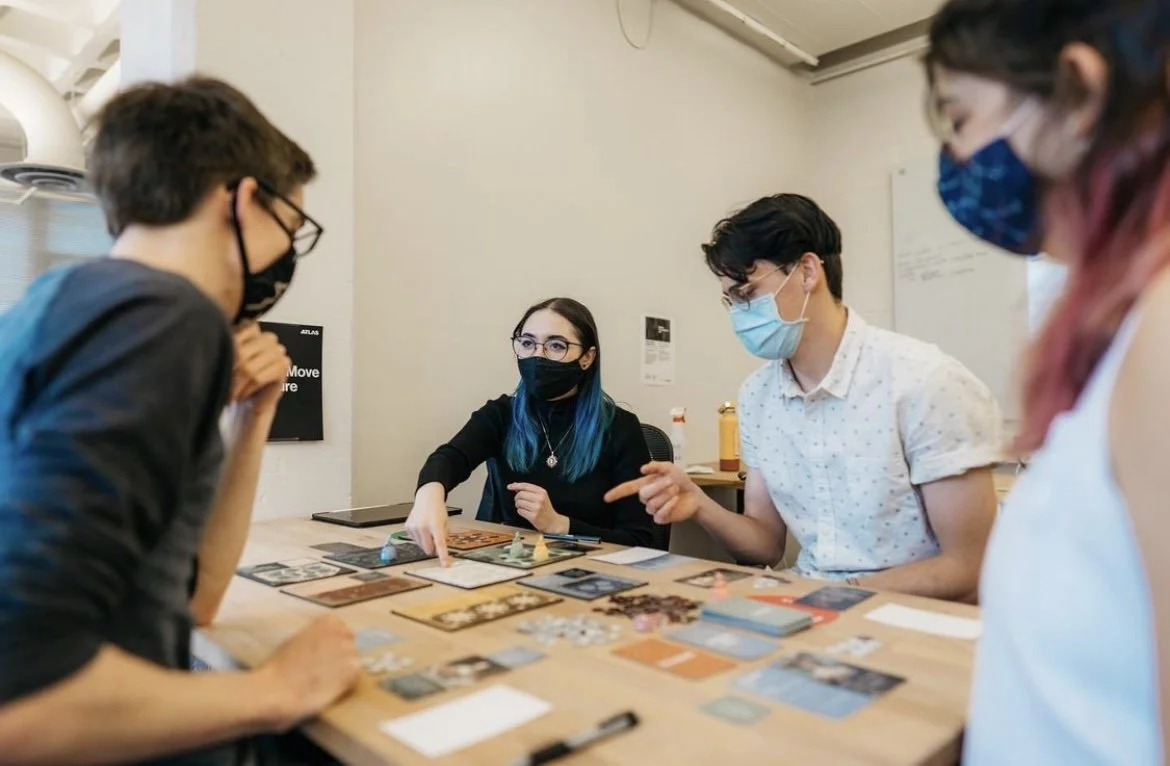
The process of designing consisted of weekly iterations, play-testing sessions, and revisions. I aimed to conduct play-testing 1 to 2 times a week so that I could make revisions based on feedback and observations.
ADDING JUICE
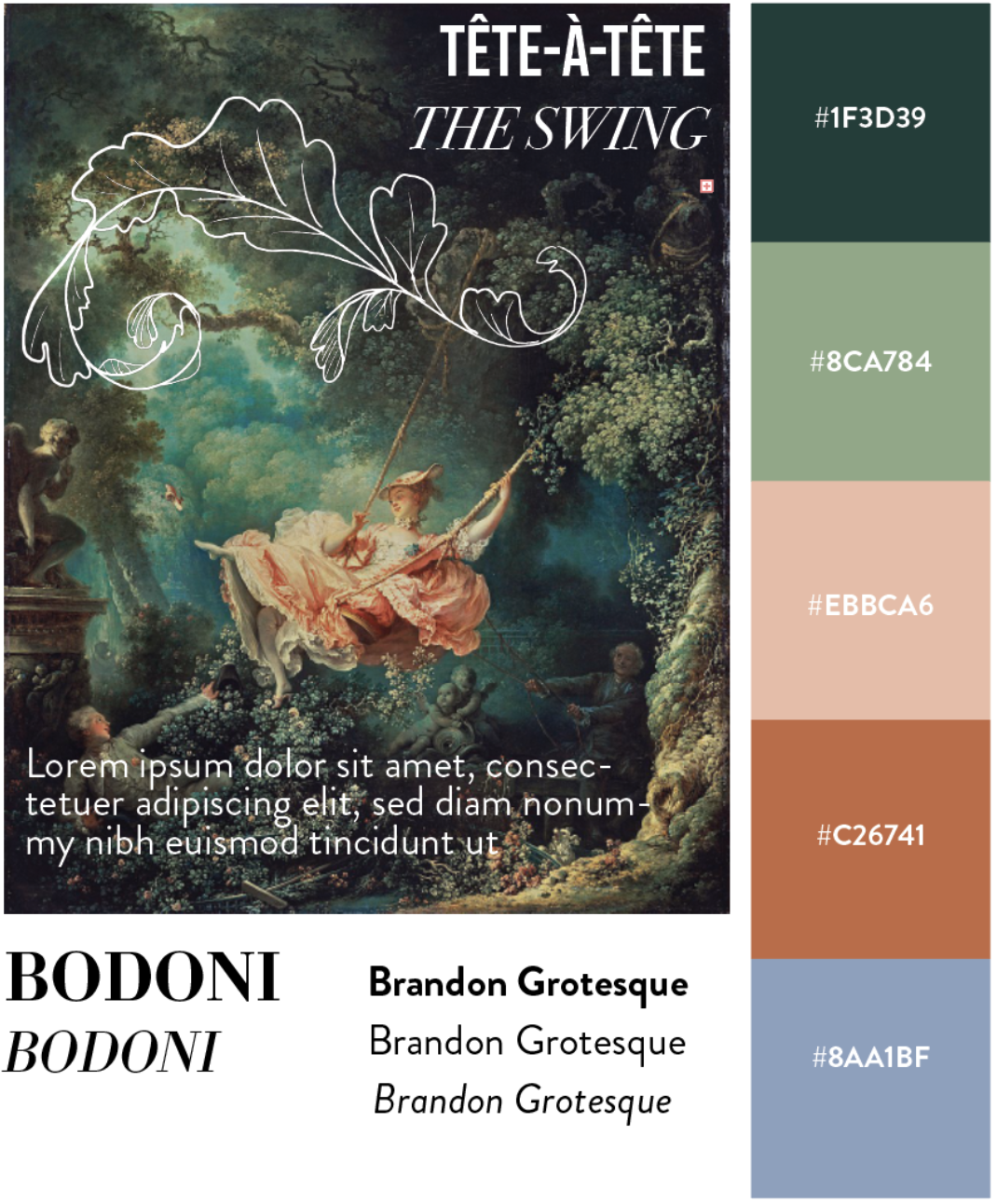
The design elements that were implemented were kept relatively simple so they wouldn't clash or overpower with the art used in the character and event cards.
The color palette was created using a color selector and a few different art pieces to ensure cohesiveness.
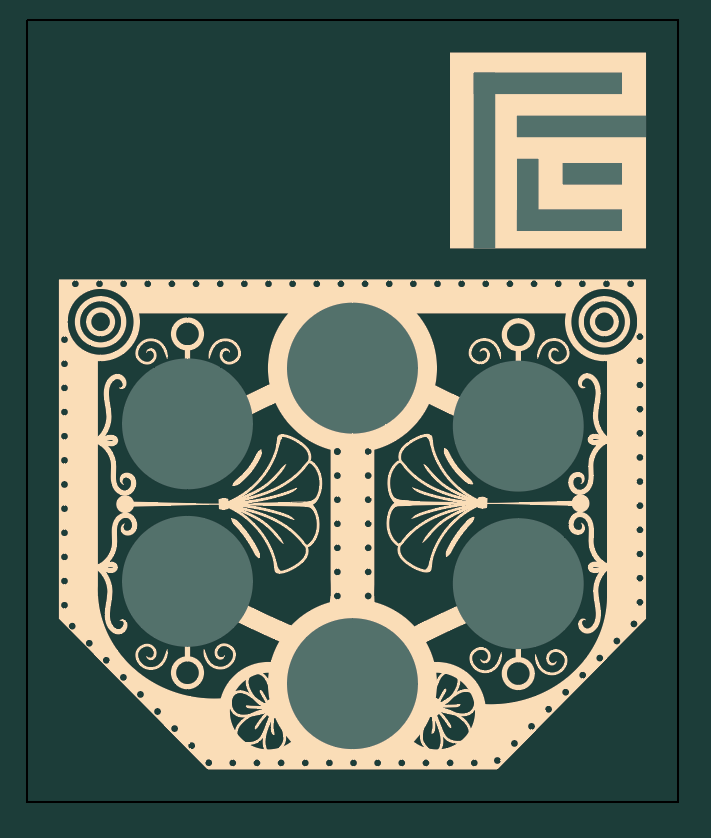
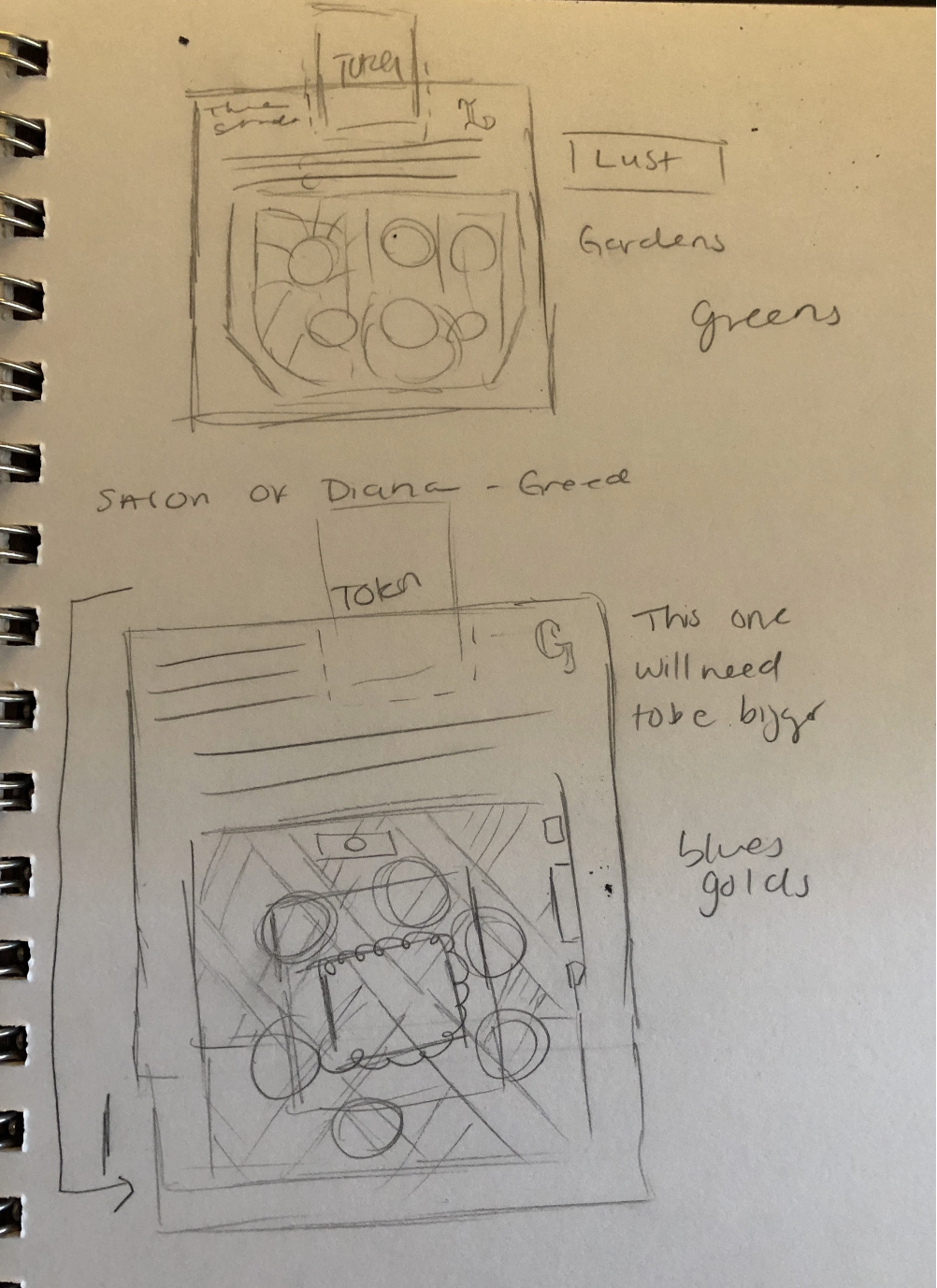
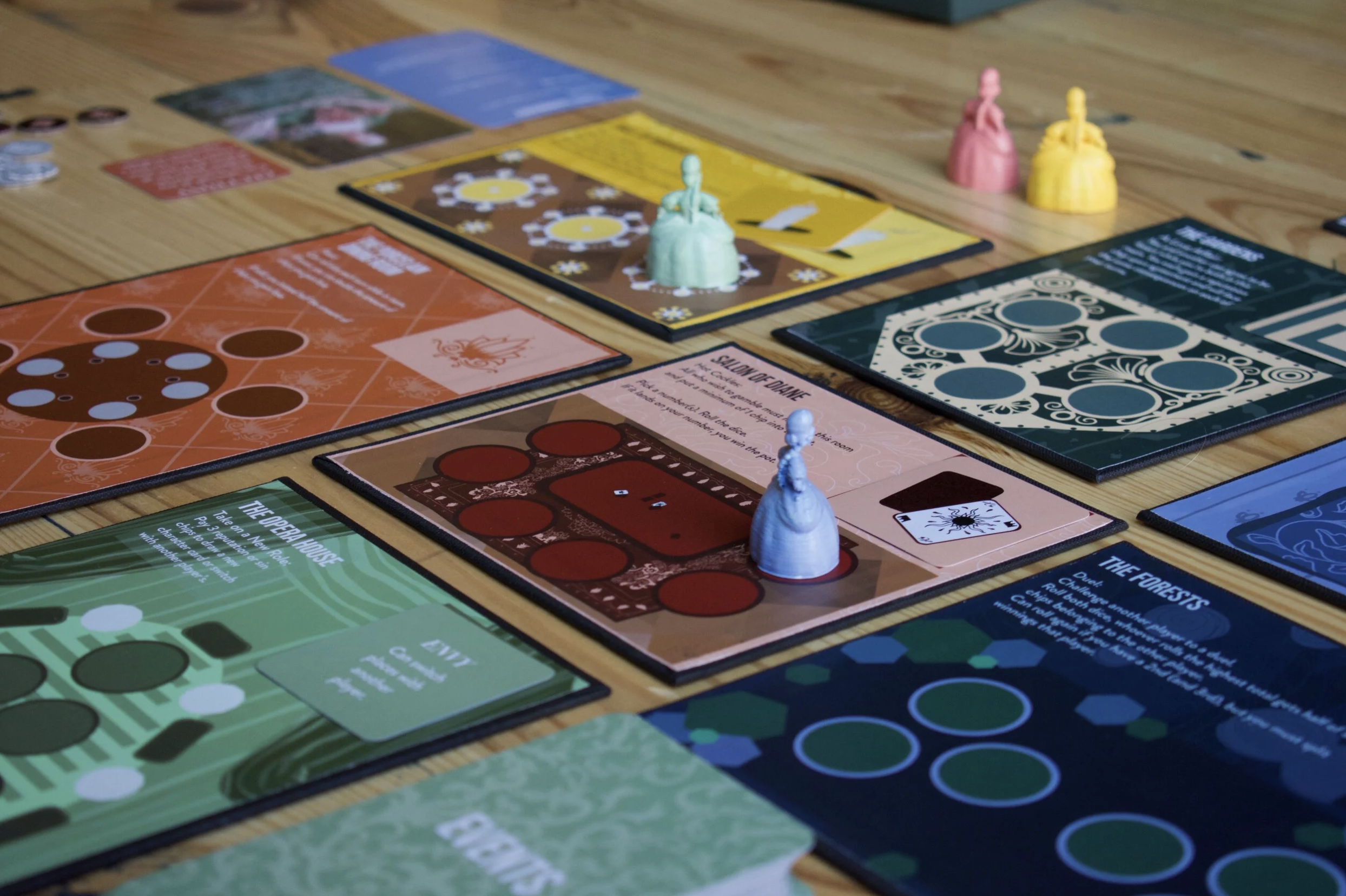
Once I had all the boards designed and the cards written, I prepared my files to be printed. This was the final result!
Thank you for Reading!
Check out the weekly proccess blog